

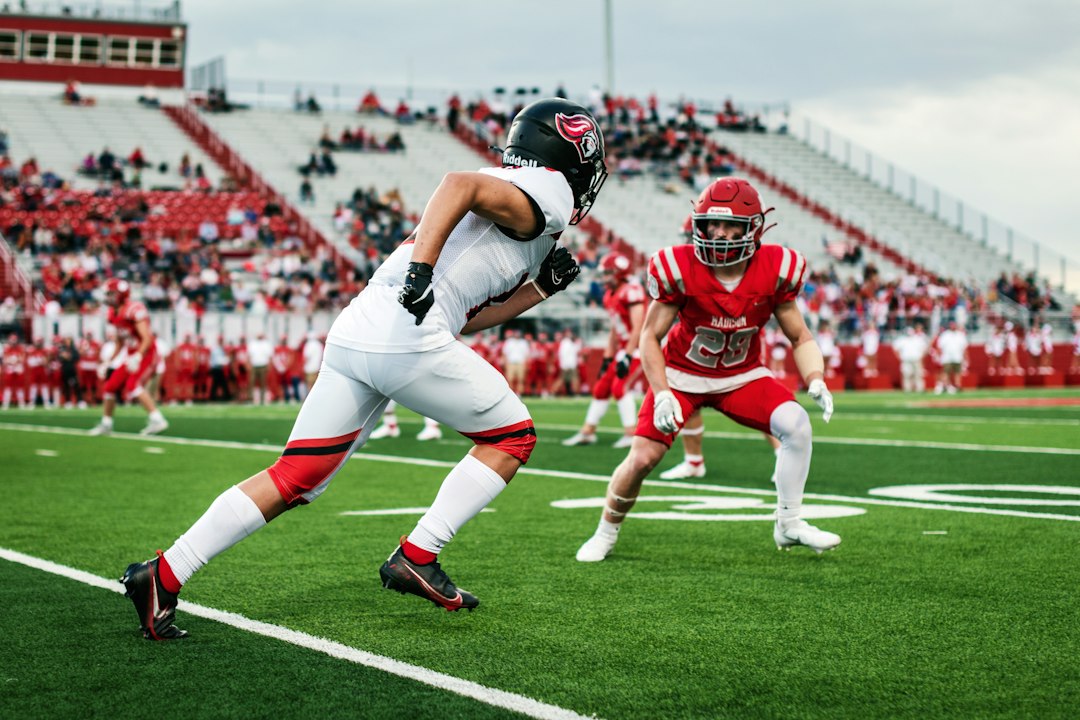




A homecoming game in Oberlin, Louisiana ended at halftime last week — not because of the scoreboard, not because of weather, not because of anything the kids on that field did wrong. According to Sports Illustrated High School Sports, police say two Centerville Tigers coaches allegedly fought each other at halftime, and officials called the game. The Oberlin homecoming was finished before the second half ever kicked off.
For anyone who ever pulled on pads, laced up cleats, and sprinted through a paper banner with their school's name on it — that headline lands somewhere deeper than the news cycle. It doesn't read like a story about other people. It reads like something that happened to a version of you, once, a long time ago, on a Friday night you still remember better than most days since.
This piece isn't really about the incident in Oberlin. It's about what homecoming is. What it was. And what it costs when it gets cut short before the real thing even has a chance to finish.
Homecoming Night Was Never Just a Football Game
People who never played have a hard time understanding this part: the football was never the point.
There was a scoreboard, yes. There were assignments and schemes and a head coach who would run you back to the start of a drill rather than watch you miss your gap twice in a row. All of that was real, and all of it mattered in the specific way that only things you're seventeen and completely committed to can matter.
But the game was the container. What lived inside it was something else.
It was the particular smell of a field that had been watered that afternoon — cut grass and dirt and something electric in the air that you only ever smelled on nights like that one. It was the PA system waking up during warmups, crackling out something that felt like a soundtrack even if it was just a playlist someone's dad had put together. It was looking up into the stands mid-stretch and finding the faces you were looking for — your parents, your girlfriend, your old coach from two grades back — all of them there, all of them pointed at you.

It was the jersey. The number on your back. The school name across your chest. And the specific current that ran through you when you understood, without having to say it out loud, that tonight, on this field, in this town, you were exactly where you belonged.
Every former player knows that current. Most of us haven't felt anything quite like it since.
Homecoming was the night the whole community turned toward you and said: this matters, and so do you. You can't manufacture that feeling. You can't find it again at thirty-five in a Tuesday night rec league, no matter how competitive the officiating gets. Homecoming was singular. It was yours. And for the players who showed up in Oberlin last week, it ended at halftime.
What Happens Inside You When the Night Just Stops
Every former player carries a version of this feeling — the specific wrongness of a game that ends before it's supposed to.
It doesn't happen often. But when it does — a lightning delay that never clears, a situation on the sideline that shifts the whole energy of the night, something that pulls the adults in the wrong direction at the wrong moment — the sensation is the same regardless of the cause. A kind of suspended disbelief. A wait, that's it? that doesn't compute because your body is still inside the game.
The muscles are still warm. The adrenaline is still moving. You had halftime adjustments to make and a second half to play. And then suddenly you didn't.
Every former player who has stood in a locker room after a game ended the wrong way — not at the final whistle, not with the scoreboard settling the question — knows what to do with their hands in that moment. Which is nothing, because there's nothing to do. The cleats are still on. The pads are still buckled. Nothing feels finished because nothing is.
That incompleteness doesn't dissolve. Former players who had a season end under circumstances outside their control — an injury, a forfeit, a call that came from somewhere they couldn't see — describe it as a chapter without a last page. The story just stops. You never find out how it ended because it didn't end, not the right way.
The players who suited up for Oberlin's homecoming last week got handed that exact feeling on the one night it stings most. A second half that now lives permanently in the imaginary, where it can't be won or lost or remembered properly.
The Adults Were Supposed to Hold the Frame Together
What sits uncomfortably in the chest of every former player reading this isn't outrage. It's something quieter than that.
The kids didn't do anything wrong.
They went through the week. They sat through the pep rally. They heard their names over the intercom. They ran warmups, played a first half, and walked into the locker room at halftime ready to hear what needed to change — and something happened on the other side of that equation that had nothing to do with them and everything to do with the adults they were counting on.
In high school football, coaches occupy a specific place in the architecture of a player's world. They are the ones who hold the structure together when everything else is uncertain. The ones who demand accountability in a way that feels like respect rather than control. The ones who — whether they're correcting your footwork at seven in the morning or pulling you aside to ask how things are at home — are on your side in a way that most people in your life aren't quite managing yet. That's the unspoken contract at the center of the whole thing.
When that contract cracks, even in a way not directed at you, something shifts in how the whole experience feels. Former players who experienced a moment where the adults in charge lost the thread describe it the same way: the game felt smaller afterward. Like the frame that made Friday nights feel important had developed a fault line you couldn't unsee.
Most former players were fortunate. Most of us had coaches who held the frame even when things were coming apart at the edges. We didn't always appreciate that in the moment. We understand it clearly now.
The Friday Night You Carry With You
Marcus T., 34, played defensive end for a small Louisiana program in the early 2000s and still describes his senior homecoming the way some people describe a wedding — in granular, specific detail, like the memory never stopped developing. He remembers the exact path the team walked from the bus to the gate, the particular sound the chain-link fence made when the first player pushed through it, and the way his grandmother's voice cut through the crowd noise from the third row of the visitors' side.
"That night I understood for the first time that all the work had been for something," he said. "Not the win, not the stats. Just the fact that I was in it and it was real."
His second half happened. His game got to finish.
For the players in Oberlin, the homecoming memory that's being locked in is a halftime locker room and a quiet bus ride home on a night that was supposed to be one of the great ones. That version stays — not because people dramatize things, but because high school football lives in the memory at an intensity most adult experiences can't approach. The emotional circuitry is fully open at seventeen. Everything registers harder, deeper, and for longer.
What registers hardest is the thing that ends before it should.
What Former Players Do With the Feeling Years Later
Playing a sport at a formative level and then not playing it anymore leaves you in a long, quiet relationship with a version of yourself that only existed on a field. You don't walk around leading with it. You don't define yourself by it at dinner parties or job interviews. But it's there, underneath everything, doing something.
It surfaces at specific moments.
When you drive past a high school on a Friday night and see the lights still on over an empty parking lot. When someone mentions a rival school's name and your pulse registers it before your brain does. When a headline about a small Louisiana town tells you a homecoming ended at halftime, and something in you says those kids before you've finished reading the sentence.
That's not nostalgia in the soft sense. That's identity. Former players feel a story like this one because the game earned that response from them — in early mornings, in two-a-days, in every moment they chose to keep showing up when it would have been easier not to. That investment doesn't expire. The game still has a claim on you, and stories like this one are how it collects.
The players in Oberlin were right in the middle of earning that claim for themselves. They were in the thick of the night that would eventually become the memory they carry. And then the night stopped.
That stings because it's supposed to. Because former players know what was on the line, having once put exactly that much on the line themselves.
The Jersey You Wore Still Means Something
One of the quietest truths about playing high school sports is that the jersey was never simply a uniform.
It was the official document of a version of yourself that was fully inside the game — younger, unguarded, completely present in a way adult life makes structurally difficult. It had your number. It had your school's name. On Friday nights, it was the closest thing to proof that the moment was real and that you belonged to it.
A lot of former players have lost track of theirs. It moved with you and then didn't, ended up in the wrong box, got handed down to a sibling who wasn't as careful with it. The physical object is gone. What it stood for isn't.
That's the space iPlayedFor exists in — not a tribute to a team, not a licensed product, but a jersey in the style of the one you actually wore, with your name and your number on the back, designed to honor the player you were on nights that still matter.
Your Jersey Is Still Out There Waiting
Design yours in minutes and see your name and number exactly the way you remember wearing them.
Frequently Asked Questions
What happened at the Oberlin homecoming football game in Louisiana?
According to Sports Illustrated High School Sports, a homecoming game between Oberlin and Centerville in Louisiana was stopped at halftime after police say two Centerville Tigers coaches allegedly fought each other. Officials ended the game before the second half was played, cutting the homecoming night short for both programs and the communities behind them.
Why does a canceled high school game feel so personal to former players?
High school athletics — and homecoming games in particular — occupy a specific place in long-term memory that most adult experiences don't reach. The combination of youth, community investment, and the compressed emotional intensity of a single Friday night creates memories that stay vivid for decades. When a game ends before it should, former players recognize the feeling immediately, because they know exactly what was at stake and what it cost the players involved to get there.
How do coaches shape what high school sports actually mean to players?
Coaches function as the structural center of the high school sports experience. They establish the tone for how competition is conducted, how setbacks are absorbed, and what values the program actually stands for in practice. For most former players, coaches rank among the most formative figures in their athletic memory — which is part of why any disruption to that expected role carries weight that outlasts the specific incident.
Can I get a custom jersey inspired by the one I wore in high school?
Yes. iPlayedFor designs custom jerseys in the style of the jerseys former players wore — your name, your number, your sport — as a tribute to the player you were. You can start the design process at iplayedfor.com/design/start and preview exactly how it will look before placing an order.
See also: what high school sports teach you about conflict and character | football culture runs deeper in some states than others | the emotional weight of a game ending before it should