


There is a specific moment every former high school athlete remembers. Not the big game. Not the championship, if you were lucky enough to have one. The moment before practice on a Tuesday in November when it was cold, you were tired, and you went anyway.
You didn't know it then, but that Tuesday was the whole lesson.
The life skills from high school sports don't announce themselves. They don't come with a certificate or a highlight reel. They install themselves quietly across hundreds of ordinary moments — the early mornings, the brutal losses, the teammates you had to figure out how to trust, the coaches who held you to a standard you hadn't yet held yourself to. And then, years later, you're sitting in a difficult meeting or pushing through a hard week at work and you notice: I've been here before. I know how to do this.
That recognition is what this is about.
What the Scoreboard Never Measured
Ask most people what they got out of high school sports and they'll name the tangible stuff first. The fitness. The friendships. Maybe a scholarship if things went particularly well. Those things are real. But they're not the whole answer.
The deeper inheritance is a set of mental and behavioral patterns that most people carry for the rest of their lives without ever formally naming them. Research from the Aspen Institute's Project Play initiative and the National Federation of State High School Associations consistently finds that athletes who played organized sports through high school report higher rates of teamwork competency, stress tolerance, and leadership readiness in their adult professional lives — not because sports are magic, but because they create an unusually compressed environment for learning things that are hard to teach in any other setting.
You were put in pressure situations on a regular schedule. You were evaluated publicly. You experienced failure with an audience. You had to work alongside people you didn't choose, toward a goal you shared, with a deadline that didn't move.

That's not an extracurricular. That's a graduate-level course in being a functional human.
Here are the specific skills it gave you — and where you use them every single day.
The Discipline You Built Before You Knew the Word for It
Discipline is one of those words that gets used so loosely it starts to feel abstract. But you learned the concrete version of it.
Discipline, in the athletic sense, is showing up to do the specific thing that is required of you on the day it is required, regardless of whether you feel like it. Not occasionally. Not when the stakes are visible. Every day, on schedule, by habit.
You built this during the stretches of the season that nobody talks about. Not the games — the practices. The film sessions. The conditioning runs at the end of a long week when your legs already had nothing left. The skill repetitions that felt pointless until, one day in a real situation, your body did the right thing automatically because you had done it two thousand times before.
In our experience talking to former athletes across dozens of sports and dozens of years out of school, this is the skill that shows up most consistently in professional contexts. The person who files the report before it's due, who preps before the meeting instead of winging it, who builds the habit of doing the unsexy work — that person is almost always drawing from a reservoir that was filled during a high school athletic career.
The translation is direct: discipline built in practice becomes reliability built in life. Your coach called it showing up. Your employer calls it professionalism. It's the same thing.
The Habit Architecture Underneath
What made high school sports so effective at building this wasn't motivation — motivation is unreliable and season-dependent. It was structure. A practice schedule is an externally imposed habit architecture. You didn't have to decide whether to go; the decision was already made. You just had to execute.
Over time, that architecture internalizes. You stop needing the external structure because the behavior has become what you do. Former athletes often describe this as "I just know how to start things" — the activation energy that stops most people from beginning a hard task is lower for people who spent years being trained to begin on command.
How You Learned to Lose Without Losing Yourself
This one is harder to talk about, but it might be the most important skill on the list.
At some point in your high school athletic career, you lost. Publicly, painfully, in front of people who mattered to you. Maybe it was one devastating game. Maybe it was a whole season that went sideways. Maybe it was getting cut, or getting passed over for a starting spot, or playing your best and watching it not be enough.
And then you came back.
That's not obvious. The decision to return after a real loss — to show up for the next practice when the disappointment was still fresh, to suit up for the next season after the last one broke your heart — that is a learned behavior. Most people, in most environments, never have to make that decision repeatedly and publicly. High school athletes make it over and over.
Marcus T., 38, played varsity soccer for three seasons at a mid-sized school in the midwest and never made it past the first round of the state tournament. "We lost in overtime junior year and I cried the whole bus ride home," he says. "But I remember my coach saying something after — not a speech, just one sentence: 'You'll know how to do tomorrow.' And she was right. The next day I was at practice." He now runs operations for a regional logistics company and says his tolerance for project failures — the kind that would derail his peers — traces directly back to those bus rides home.
What you built in those moments is the technical skill of failure recovery. You learned the difference between a loss that defines you and a loss that informs you. You learned that the scoreboard resets, that the season ends and another begins, that your identity is not equivalent to any single result.
That skill, deployed in adult life, looks like resilience. It looks like the ability to absorb a difficult quarter, a rejected proposal, a professional setback — and come back to work on Monday without needing to be rebuilt from scratch.
The Confidence You Earned Instead of Being Given
Confidence was never handed to you in high school sports. Nobody sat you down and told you you were capable and expected that to stick. What you got instead was more durable: proof.
Every hard rep you finished when your lungs were burning, every game you played through nerves, every season you got through — each one became a receipt you could hold onto later. That's the difference between confidence you're told and confidence you earn. The first one evaporates the moment someone doubts you. The second one you can reach for years later, because it's built from things you actually did.
That same proof did a second job you probably didn't notice at the time. It taught you how to stay composed when the pressure arrived — and in sports, the pressure never waited until after the result. It showed up in real time, during the play, with the clock running. You learned to slow your breathing before a free throw, a serve, a snap. To keep your hands steady when the whole game came down to a single moment.
You also learned to read the room at speed — your teammates' body language, the shift in an opponent's energy, the tone of a huddle that was about to fall apart or pull together. That's emotional intelligence built the hard way: not in a seminar, but in live situations where misreading the moment had a real cost.
That combination — the quiet belief that you can do hard things, and the composure to do them with everything on the line — is one of the rarest skills an adult can carry into a career, a relationship, or a hard conversation. Most people never get a place to build it. You built it before you could drive.
The Specific Kind of Trust That Only Teams Teach
There is a kind of trust you can only build by depending on someone in a situation where the stakes are real and the outcome is uncertain. Reading about teamwork doesn't produce it. Taking a group project class doesn't produce it. Playing organized sports produces it.
In a team sport, you are repeatedly required to do your specific job well enough that someone else can do theirs. You cover your zone so your teammate can cover theirs. You set the screen so the shooter can shoot. You run the route at precisely the depth the quarterback expects, not approximately, because approximately is incomplete and incomplete is a turnover.
This specificity — the requirement that trust be operational, not just emotional — is what makes athletic teamwork so transferable. You didn't just learn to like your teammates. You learned to rely on them in a way that was concrete, technical, and had consequences.
The life skills from high school sports include this particular version of trust, and it shows up in adult professional environments in unmistakable ways:
- The ability to hand off work without needing to control the result
- The capacity to do your part of a shared project with the same care you'd give a solo effort
- The instinct to communicate proactively when something on your end is going wrong, because leaving your teammate uninformed is its own kind of failure
Individual sport athletes build a different version of this skill — the internal trust, the ability to depend entirely on yourself under pressure, to manage your own nerves without a team to anchor you. That skill translates too: into the capacity to work autonomously, to stay focused without external accountability, to deliver under scrutiny without falling apart.
Both versions are valuable. Both come from the same compressed, high-stakes training environment that most adults never experience again after they leave the sport.
Coaching: Learning to Be Led, Learning to Lead
You had at least one coach who pushed you harder than you thought was necessary. You may not have appreciated it in the moment. You probably do now.
The coach-athlete relationship is one of the few structured environments in modern life where a young person is given direct, sometimes blunt, sometimes uncomfortable feedback about their specific performance — not their effort, not their attitude, but the specific thing they did and whether it was good enough. This is unusual. Most feedback systems in schools and early professional environments are cushioned, indirect, or withheld entirely.
Being coached well teaches you how to receive feedback. Specifically:
- How to separate the evaluation of your work from the evaluation of your worth
- How to extract the actionable instruction from criticism that might feel harsh in delivery
- How to ask for specific guidance rather than waiting for problems to become obvious
And then, for athletes who eventually took on leadership roles — team captain, upperclassman, peer mentor — the sport teaches the other side. How to hold someone to a standard without making them feel small. How to communicate an expectation clearly enough that another person can actually meet it. How to build a culture where people do the hard thing voluntarily because they believe it matters.
In our experience, people who held any kind of leadership role in a high school athletic program — even informally — carry an unusually practical fluency in managing people. Not the theoretical kind. The kind that knows how to have a direct conversation, motivate someone who's checked out, and run a room where accountability is real.
Time Management No App Could Have Taught You
Here is a reality most high school athletes don't think about until years later: you were doing it harder than most adults manage it now.
You were a full-time student taking real courses with real homework requirements. You were practicing — often two hours a day, five days a week, plus games. You may have had a job, a family obligation, a commute. And you made it work. Not perfectly, maybe. But functionally.
The time management you developed during that period was not theoretical. It was imposed by necessity. You didn't have the option to extend a deadline because practice ran late. You figured out how to use the forty minutes before film review. You learned which homework could be done on a bus and which required a desk and silence.
That particular calibration — the ability to work within hard constraints and still produce — is one of the most practically valuable skills an adult can have. And most people who learned it don't trace it back to where it came from.
It came from your sport.
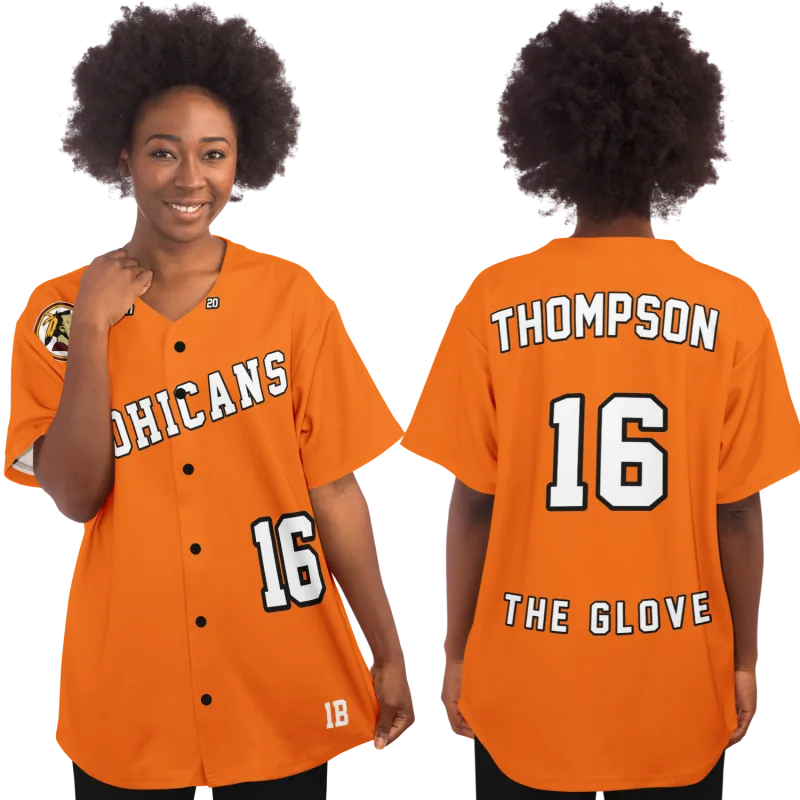
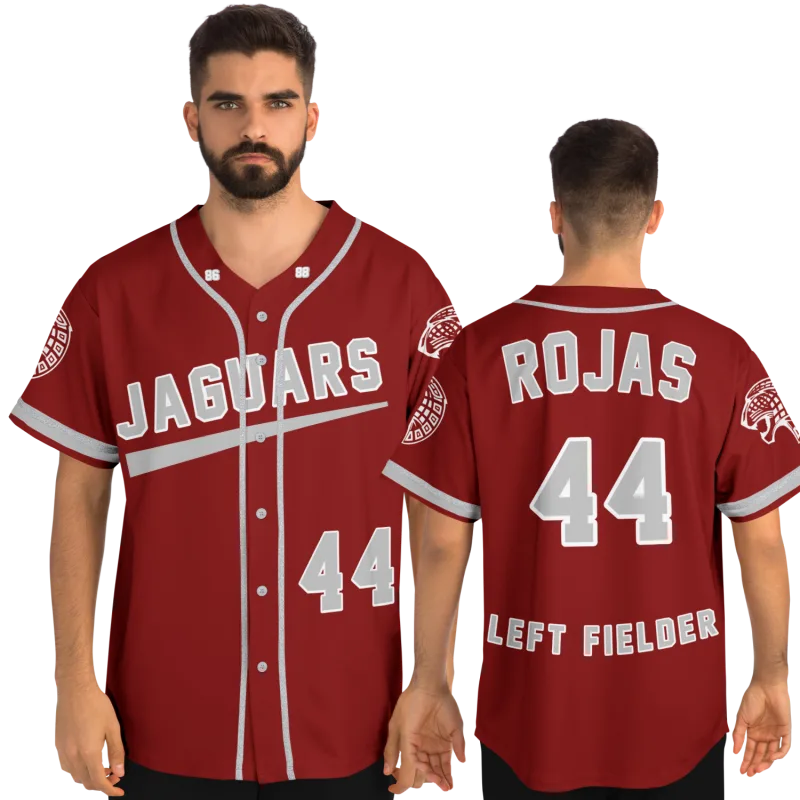
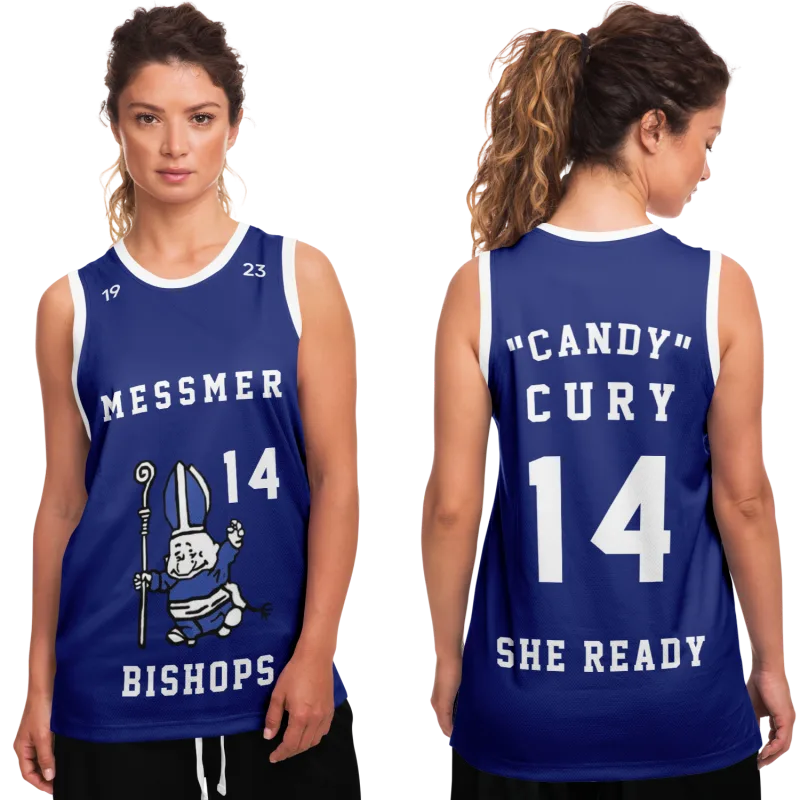
Your Jersey is Still Out There Waiting.
Design yours in minutes and see your name and number just the way you remember it.
Frequently Asked Questions
Do these life skills from high school sports apply even if you weren't a star athlete?
Absolutely — and in some cases, more so. The skills described in this article develop through the experience of participation, not through exceptional talent. A player who sat the bench, who struggled with a skill and kept practicing, who supported a team through a losing season — that player built the same resilience, discipline, and trust architecture as a starter. Sometimes more of it. The scoreboard was never the point.
What if I only played one season or one sport — did it still matter?
Yes. Even a single season of organized high school athletics deposits something lasting. The discipline of a practice schedule, the experience of public performance, the requirement of working toward a shared goal — one season is enough to begin the installation of these patterns. Multiple seasons deepen and reinforce them, but the foundational experience is not dependent on longevity.
How do these skills compare to what kids learn from individual sports vs. team sports?
They're complementary, not equivalent. Team sports build relational skills — trust, communication, accountability to others, the ability to subordinate individual performance to collective outcome. Individual sports build internal skills — self-regulation, autonomous discipline, the ability to perform without external support. The best-rounded adult athletes in our observation are often people who had experience in both environments at some point in their development. If you played one type, you likely compensated for what the other builds — but you probably know which muscles feel stronger.
Are these skills actually transferable to work environments, or is that overstated?
The transfer is real, but it isn't automatic. The skills are latent — they were built, but they don't apply themselves. What activates them is the recognition that a current situation resembles a past athletic one. The person who consciously draws the connection ("this project deadline feels like game week — I know how to run this") uses the skill actively. The person who never makes the connection may have the capacity but not the habit of deploying it. Part of what this reflection is good for is making that connection explicit, so the skill becomes available on demand rather than by accident.
What's the single most underrated life skill that high school sports teach?
Ask ten former athletes and you'll get ten answers. But the one that comes up most often in conversations about adult professional life — and the one that's hardest to teach in any other setting — is failure recovery. The ability to lose badly, feel it fully, and come back for the next session without requiring a complete emotional rebuild. That skill is extraordinary in adults, rare enough to be genuinely differentiating, and almost entirely a product of having done it repeatedly and publicly as a young athlete.
See also: what high school sports actually teach you that nothing else could