




It hits you somewhere around late September. A friend texts a photo (bleachers, marching band, the old scoreboard) and suddenly you're back on that field, that court, that track. You remember exactly what the number on your jersey felt like.
Then comes the question: Did anyone keep the stats? Is the film still somewhere?
If you've ever tried to find old high school sports records, you already know the frustrating reality: schools don't exactly maintain a centralized athlete archive with searchable databases and same-day digital delivery. Some records live in a filing cabinet no one has opened since 2003. Some exist only in the memory of a coach who's since retired. And some, more than you'd expect, are hiding in plain sight, one right search away.
This guide covers every legitimate channel worth pursuing: your school's own channels, state athletic associations, local newspaper archives, community digitization projects, and the peers who were standing right next to you on that sideline. By the end, you'll have a clear search path and the specific contacts to reach out to, not a vague suggestion to "call your old school."
Start With the School — But Know Exactly Who to Ask
The instinct is right. Your old high school is still the most likely place to hold what you're looking for. The mistake most people make is calling the main office and getting nowhere. The main office staff processes transcripts and enrollment. They don't manage athletic history.
Here's who actually does:
The Athletic Director is your first call. Not the secretary, not the assistant principal: the current AD. Their office maintains record books, championship banners, and in many schools, a physical archive of stats going back decades. They may not have your sophomore season split up by game, but they almost certainly know whether records exist and where they're stored.
The Head Coach of Your Sport, even if the coach has changed several times since you played, is your second contact. Coaches inherit the program's history. Many keep binders, scorebooks, and VHS or DVD libraries going back years. In my experience as a former player, coaches are also more personally motivated to help than administrative staff. They understand why you're asking.


The School Librarian or Media Specialist is criminally underutilized for this search. Many schools have digitized or archived yearbooks, game programs, and local newspaper clippings in the library. Yearbooks in particular are gold: sports sections often include full season stats, final records, and team rosters with jersey numbers.
One practical step before you call: Look up the school's current website and find the athletic department page. Many schools now post current season stats, and some have uploaded historical record boards. If you can see your sport listed, the infrastructure exists. It's just a matter of how far back it goes.
State Athletic Associations: The Archive Most People Never Check
Every state has a governing body for high school athletics, and most of them maintain historical records far beyond what any individual school keeps.
The National Federation of State High School Associations (NFHS) is the national umbrella organization, but the real archives live at the state level. If you played in Texas, your records may live with the UIL. In California, the CIF. In Illinois, the IHSA. These organizations have tracked state championships, qualifying times, all-state rosters, and record progressions for decades.
What you're most likely to find through a state association:
- State championship brackets and results going back to the association's founding in most cases
- All-state or all-conference honors from seasons that produced official recognition
- State meet or tournament records for individual and team performances
- Record progressions for track and field, swimming, and other measurable sports
What you're unlikely to find:
- Regular-season game-by-game stats
- Individual records that didn't reach the state qualifying level
The search process is straightforward. Find your state's high school athletic association by searching "[your state] high school athletic association." Navigate to the sport section. Many associations now have digital archives searchable by year and school. If the archive isn't online, the association's records department will often respond to a direct email request, especially for championship-level history.
If you were good enough to place at the state level, this is where the official documentation lives.
Two more state-level resources belong on your list. If you're chasing a benchmark (an all-time, state, or national record), the NFHS National Record Book documents verified all-time national records across 16 high school sports. And if you ran track or cross country, Athletic.net is the primary results archive for the sport: it tracks athletes from their school's all-time lists up through state and national records, and much of it reaches back before the digital era.
Newspaper Archives: Where the Game Was Actually Recorded
This is the channel that consistently surprises people.
Before school districts had athletic websites and before coaches uploaded stats to online platforms, the local newspaper covered high school sports with genuine depth. Beat reporters attended games. Box scores ran every week. Season summaries, tournament brackets, and feature stories on standout athletes appeared regularly. For many communities, the local paper was the only systematic record of what happened on that field.
That coverage didn't disappear. It got digitized.
Where to search:
Newspapers.com and GenealogyBank both hold large archives of digitized local papers, many going back to the 1950s and earlier. A basic subscription gives you search access. Enter your high school's name, your sport, and the approximate year range. You'll often surface box scores, game recaps, and occasionally feature stories.
Google News Archive covered some newspapers before it was discontinued as a standalone product, but many of those archives were migrated to Google Books or to individual newspaper sites. Worth a quick search.
Your State or County Library's Digital Archive is often free to access with a library card and holds local newspapers not covered by the commercial services. Many state libraries have digitization projects specifically for local papers. A librarian at your county library can tell you what's available in about five minutes.
The newspaper's own website sometimes has a searchable archive going back further than you'd expect. If the paper is still operating, try the search function on their site before paying for a third-party service.
The specific search that works best: type your high school mascot or full school name in quotes, your sport, and a year. "Lincoln High Wildcats basketball 1998" will surface more results than a general search.
Game Film: The Hardest Find — And How to Actually Get It
Here's the honest reality about game film: most of it from before 2010 exists on VHS or early digital formats that schools had limited reason to preserve. Some was taped over. Some degraded. Some is sitting in a coach's garage in a box that hasn't been opened since the Clinton administration.
That said, more survives than people expect, and the search has a specific logic.
Start with boosters and parents. The most consistently preserved game film from the pre-streaming era was shot by parents in the stands. Find former teammates on social media and ask directly: does anyone have tape? This almost always turns up something. Parents who filmed for their own kid often filmed full games, and those tapes still exist.
Maria C., 38, a former varsity volleyball player in New Mexico, went looking for footage from her 2003 state semifinal appearance. The school had nothing. But she posted in a Facebook group for her graduating class and found that a teammate's father had filmed the entire tournament on a camcorder and still had the tapes. A local shop converted them to digital for $40.
Check YouTube before you assume nothing's there. A surprising number of people have uploaded old high school game footage, sometimes the whole game, sometimes highlight reels. Search your school name, your sport, and the year. Try variations. If anyone digitized old footage and uploaded it, YouTube's search will surface it.
Contact former assistant coaches. Head coaches move on, but assistant coaches often stay connected to a community longer and tend to be the ones who maintained the day-to-day film library. A quick search on LinkedIn or through your sport's alumni network can surface names.
For schools that used digital recording systems after roughly 2008–2010: Many districts used platforms like Hudl, which may still hold archived footage from that era. Contact the current coaching staff and ask whether old Hudl archives exist under the school's account. Some do.
For games from roughly 2013–14 onward, check the NFHS Network. The NFHS Network is the dominant national streaming platform for high school sports, and most games from that era on are available there, searchable by school and sport. If your season came after schools started streaming, this is often the single fastest place to pull up the actual broadcast.
State associations are digitizing their film libraries, too. A growing number of state athletic associations now host historic game film themselves. The Michigan High School Athletic Association posts digitized historic finals on its YouTube channel and invites anyone holding old footage to email films@mhsaa.com, and the Illinois High School Association redesigned its site around a video archive of more than 2,700 historic games. Before you give up on film from any era, check your state association's website or YouTube channel. You may find your game was preserved at the state level.
Community Archives, Alumni Networks, and the People Who Were There
The official channels don't capture everything. But the community does.
Your alumni association or reunion committee is an underused resource for this specific search. They've often aggregated photos, programs, and clippings for reunions. If your class has had a 10, 20, or 25-year reunion, someone assembled a historical packet, and that packet may include sports coverage.
Facebook alumni groups for your high school and graduating class are currently one of the most effective search tools available. Post a specific request: name the sport, the season, what you're looking for. Be specific about what you played and when. The response rate from people who have programs, photos, box score clippings, or digitized film is genuinely high, especially around homecoming season when collective nostalgia peaks.
Local historians and historical societies sometimes maintain school and community sports history as part of a broader local archive. If your school has a notable athletic tradition, there's a reasonable chance someone has documented it.
Your teammates are an obvious starting point that people somehow overlook. A group text or a message in a team chat can produce a photo of a newspaper clipping, a scan of a program, or a memory of exactly where the stats binder ended up, faster than any institutional search.
When the Records Genuinely Don't Exist
This is worth saying plainly: sometimes the records aren't findable because they were never kept, were lost, or were destroyed.
Schools had no legal obligation to maintain athletic statistics. Coaches kept what they cared to keep. Newspapers closed or reduced coverage. Film degraded. Floods, fires, and building renovations claimed archives.
If you've exhausted the channels above (school AD, coach, state association, newspaper archives, alumni networks, former teammates) and come up empty, the honest answer may be that the documentation is gone.
What isn't gone is what the people who were there remember. And sometimes the most valuable record is the one you write yourself: a conversation with a former coach, a story assembled from teammates' memories, a scrapbook built from whatever fragments survive. That's not a consolation prize. That's history the way most history actually gets preserved.
The sensory memories (the sound of the gym at tip-off, the weight of the jersey on your shoulders, the smell of the field after a Friday night game) live deeper than any stat sheet ever could.
Your jersey is still out there waiting.
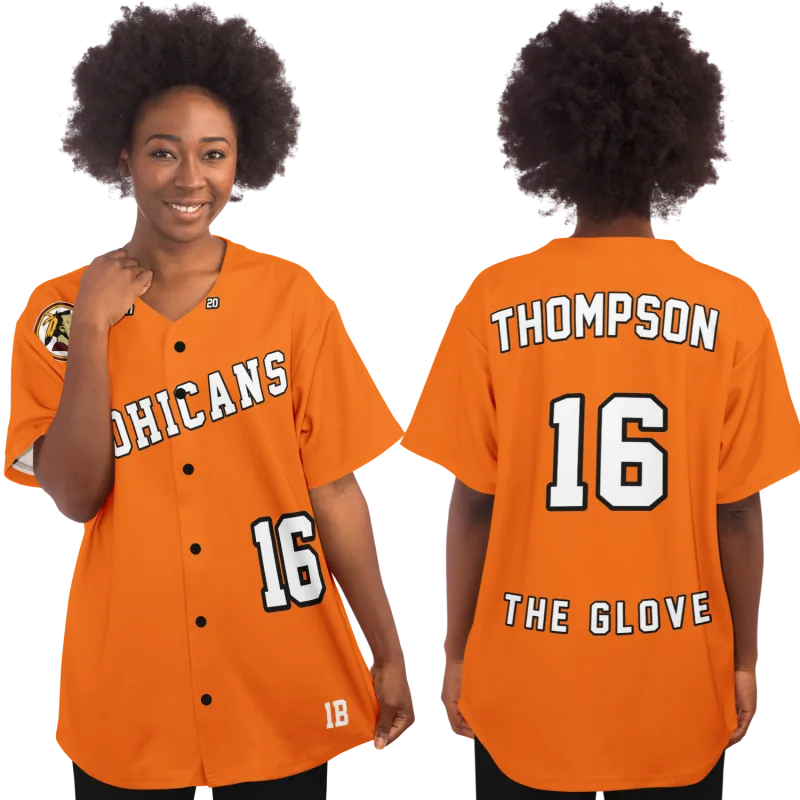
You tracked down the records. You found the old game film. Now bring those memories to life on something you can actually wear. Design your commemorative jersey in minutes with your name and your number in colors that never crack, peel, or fade.
Frequently Asked Questions
How far back do high school sports records typically go?
It varies significantly by school and state. Most state athletic associations maintain championship records going back to their founding. In many states, that's the 1920s or 1930s. Individual school records are less consistent: some athletic departments have preserved stats continuously for 50+ years, while others may have documentation gaps due to staff turnover, building moves, or simple neglect. Newspaper archives are often the most reliable source for regular-season records before the digital era.
Can I request my own athletic records from my high school?
Yes, and as a former student and athlete, you have a reasonable basis to make that request. Contact the athletic director in writing (email is fine) and be specific: the sport, the seasons or years in question, and what you're looking for (stats, team records, all-conference honors, etc.). Schools aren't legally required to maintain or produce this material the way they are with academic transcripts, but most will make a genuine effort to help if the records exist.
Are there national databases of high school sports records?
There is no single national database that comprehensively covers all high school sports across all states. MaxPreps is the closest thing currently available for schools and seasons where coaches actively entered data. It covers many schools going back to the early 2000s. For older records, state athletic association archives and local newspaper databases remain the primary sources. Track and field has somewhat better historical documentation through organizations like the Milesplit network.
What's the best way to recover old game film that's on VHS?
If you locate VHS tapes (whether from a parent, a coach, or a school archive), local video transfer services can convert them to digital files for a typical cost of $20–$60 per tape. Many electronics retailers and photo services (including chains like Walgreens and CVS) offer this service, as do local videography businesses. Convert sooner rather than later: VHS tape degrades over time, and tapes from the 1990s and early 2000s may already show quality loss. Once digital, upload a backup to cloud storage immediately.
What if my high school has closed or merged with another school?
Closed or merged schools present the most complicated records search. Start by identifying which district absorbed the school and contact that district's central office. Physical assets (trophies, record boards, film libraries) were often transferred to the successor school or stored in district facilities. Local historical societies and libraries sometimes received records from closed schools. State athletic association records for championships typically survive school closures intact, since those are maintained at the state level.
See also: how to find your old high school game film and highlight footage | why your senior season memories are so vivid | reconnect with former high school teammates