


The Final Iowa Rankings Are In, and Every Former Player Just Felt That November Ache, whether they admit it or not. If you scrolled the 2026 list the way most of us do, you went straight to one name first. Maybe it's your old school. Maybe it's the rival you never quite beat. Maybe it's a town you drove two hours to on a bus that smelled like wet pads and gas station nachos. Either way, you found it, you read the number next to it, and something in your chest did a small, quiet thing.
That thing is what this piece is about.
The ranking itself is simple: the last Iowa Top 25 of the year, released after the final weekend of the regular season, the list that closes the book on a fall of Friday nights. Sports Illustrated's high school coverage published it on November 22, and you can read the full poll there if you want the order. We're not here to argue seeds or break down brackets.
We're here for the other reaction. The one that happens after you close the tab.
You Didn't Read a List. You Read a Season Ending.
There is a particular sentence every former player knows without ever having said it out loud: that's the last one.
It never arrives with a whistle. It arrives in the parking lot, or on the bus ride home, or at some random Tuesday practice when you notice the light is gone by 5:15 and you realize you'll never run this play again. Rankings do the same thing in print. The final poll isn't a prediction anymore. It's a verdict. Nobody gets to move up. Nobody gets another game to prove the voters wrong.
In our experience, that finality is what hits former players hardest, more than the scores or the upsets. The season is sealed. Every kid on every one of those 25 teams is somewhere right now, in a hallway or a living room, absorbing that it's done. Some are seniors who just played their last down and don't fully know it yet. They will, around March, when the weather turns and nobody's texting about film.

And you remember being that kid. Of course you do.
The Specific Quiet of an Iowa November
Iowa football has its own weather system of memory. It's not Texas-style stadium spectacle or California sunshine. It's breath you can see under the lights. It's the metal bleacher that bites through your jeans. It's a band playing a fight song slightly flat because the trombones are frozen. It's a gym that doubles as the postgame cafeteria, with a crockpot of something warm and a folding table of bars someone's mom made at 6 a.m.
If you played here, you know the weight of a game jersey in cold air. It doesn't feel like fabric on a locker-room hanger. It feels like armor you earned, stiff with the chill until you've run enough to warm it up. You know the specific sound of your number being read over the loudspeaker: the way the announcer stretched your last name, or butchered it, and you loved it either way.
That sound is the thing a ranking list can't print, and it's exactly what the list summons.
The Teams at the Top Aren't the Only Ones Who Mattered
Here's what the Top 25 can't tell you. Every school on that list is one of well over a hundred programs that suited up across Iowa this fall, and the ones that missed the cut played with the same ferocity. A 4-5 team in a town of 800 had a senior class that dreamed about the same Friday night as the team ranked second.
Rankings measure results. They don't measure what it cost to put on that jersey, or what it gave you back.
Our team hears a version of the same thing from former players again and again: nobody remembers the ranking, but everybody remembers the drive. The one against the team that beat you by thirty, where you got your hands on someone twice your size and held for one more second. The game you lost that you'd replay forever. The tackle nobody filmed, the block nobody noticed, the night you were exactly as good as you'd ever be.
That's the stuff that never makes a poll.
Remember When the Rankings Meant Everything?
Every former player knows this one. There was a week, maybe more than one, when the rankings were the only thing that existed. Somebody's older brother had the local paper. Somebody's dad had an opinion. The cafeteria argument about whether your team deserved to be in or out went on for four straight lunch periods, with real stakes and zero authority.
You checked the list the way you check a text from someone you're into. Fast, then again slowly, then once more to make sure you read it right.
And when you finally saw your school's name, or your rival's, or the gap where yours should have been, it meant something enormous for about forty-eight hours. Then Friday came, and it was just the game again. Just you, your number, and ten teammates who'd bled in the same dirt.
That's the real ranking. The one you carry.
Marcus T., 41, and the Jersey He Couldn't Stop Thinking About
Marcus T. played linebacker in a town in eastern Iowa, class of '03, number 54. He told us he found out about the final rankings the way a lot of former players do now: a text from an old teammate that just said a school name and a question mark. Within an hour, three guys from that squad were in a group chat arguing about a goal-line stand from senior year that nobody could agree on the details of.
What Marcus said stuck with us. "I don't have the jersey anymore. It was a school jersey, so it went back in the bin. But I can tell you exactly how the 54 looked, the way the white outline hugged the numbers. I can see it. I just can't touch it."
That's the gap. Memory is high-definition, and the object is gone. A lot of former players live in exactly that gap, and the November rankings drop is one of the moments it opens wide.
Why November Hits Different for Former Players
There's a reason this particular week lands harder than a preseason poll or a midseason update. A few things converge at once:
- The finality. The season is genuinely over, not paused. Nothing left to play for.
- The calendar. Late November is the exact stretch when your own playing days ended, or the stretch you were deep in the postseason and losing track of what day it was.
- The seniors. There are kids right now who just played their final snap, and you are, in some real way, looking at your own younger self through them.
- The silence. No Friday game to fill the weekend, and a long winter ahead before anything replaces it.
And then there's the part nobody warns you about. The sport doesn't stop being yours when you stop playing. The identity of "I played for this school, this team, this town" doesn't expire. It just stops having a place to live.
The Identity Doesn't Retire
We've talked to former players across a dozen sports, and the football ones tend to carry it loudest. It might be the physicality, the roster size, the way a football season is a relationship with fifty guys more than a hobby. Whatever the reason, the pattern holds: years later, in a work meeting or a grocery store line, a former player will say "I played at [school]" like it's still a current fact. Because it is.
You're not nostalgic for a game. You're nostalgic for who you were inside it: faster, louder, completely certain what mattered. The final rankings are a yearly reminder that someone else is being that person right now, and you got to be that person once.
Researchers have a name for part of this. The National Federation of State High School Associations tracks participation each year, and its survey consistently shows 11-player football as one of the most widely played high school sports in the country, with hundreds of thousands of participants annually (NFHS participation survey). That's a very large club of people who all know what late November feels like from the inside.
What to Do With the Feeling
You could close the tab and go on with your day. Most people do. But if the list stirred something, there are a few worthwhile things to do with it, and none of them cost much.
- Text one teammate. Not a big message. A school name and a question mark works. You'll be on the phone within the hour.
- Pull out whatever you still have. A program, a photo, a ticket stub, a mouthguard in a drawer. Hold it for sixty seconds.
- Go to the next home game next fall. Stand where you stood, or near it. Let the smell of the field do the work.
- Put your number back on something. This is the one most people skip.
That last one deserves its own section.
The Missing Piece Is Usually the Jersey
Here's something we've noticed over the years: of everything a former player has lost, the jersey is the thing they ask about most. Not the trophy, not the film, not the stat sheet. The jersey. Because it was the one object that was yours: your name across the shoulders, your number, the specific cut and color of a team that no longer exists in that form.
Most school jerseys go back to the equipment room. Some get reissued to the next kid. Some are cut up for rags. The ones that survive are in a closet in someone's parents' house with a moth hole near the collar.
So the feeling the final rankings stir up tends to resolve in one of two ways: it fades by Monday, or it lodges and turns into a question. Where's my jersey? And then, almost immediately after, a better one: Could I get one?
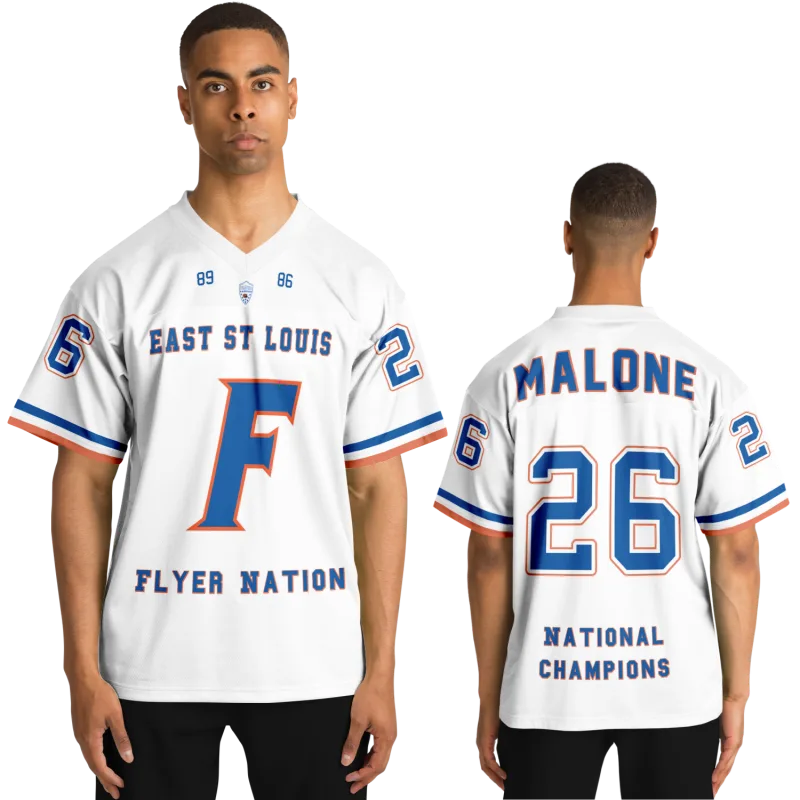
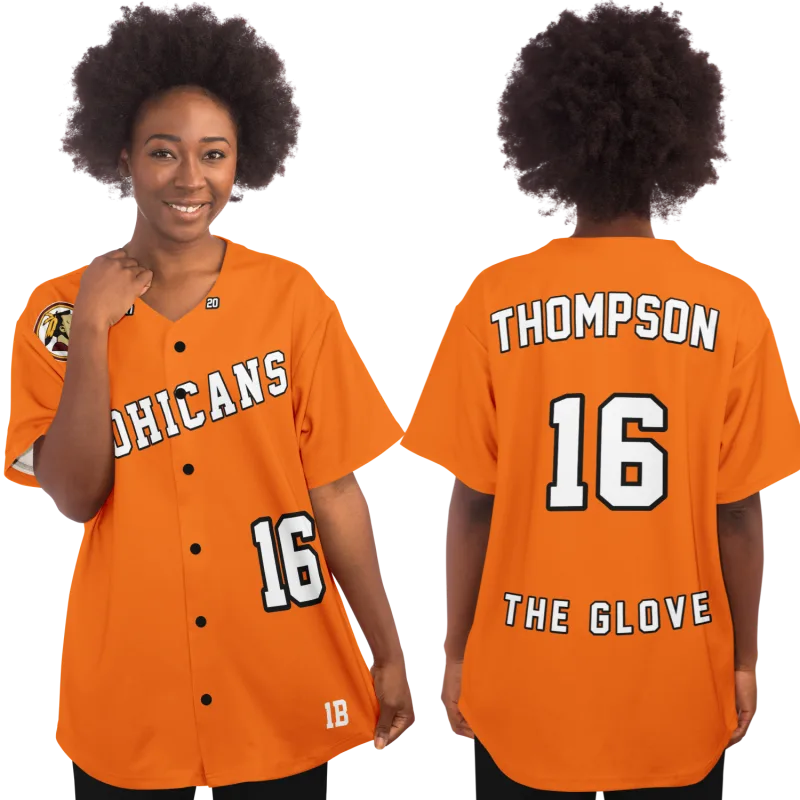
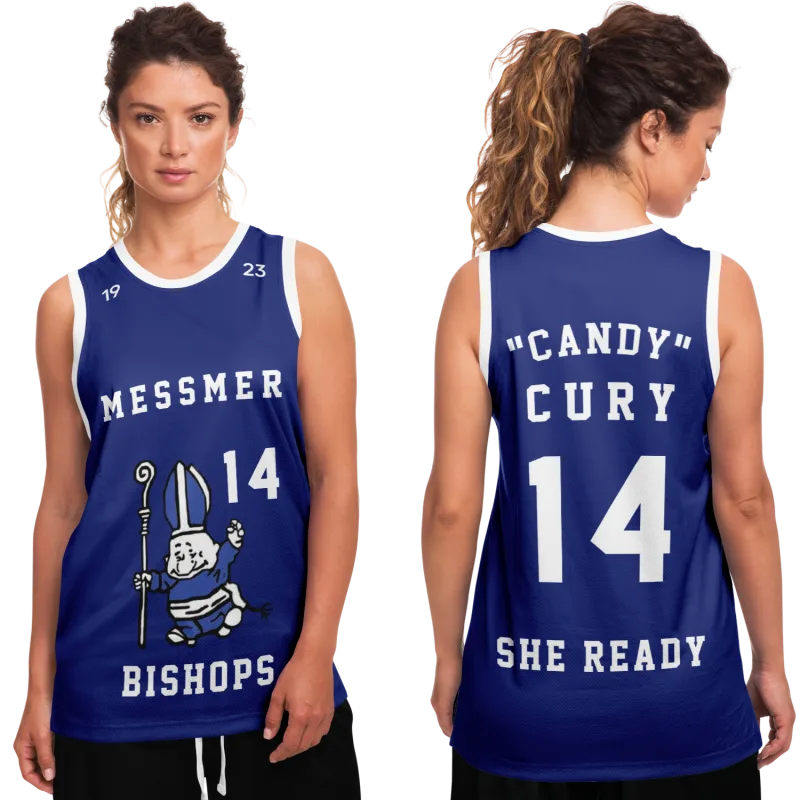
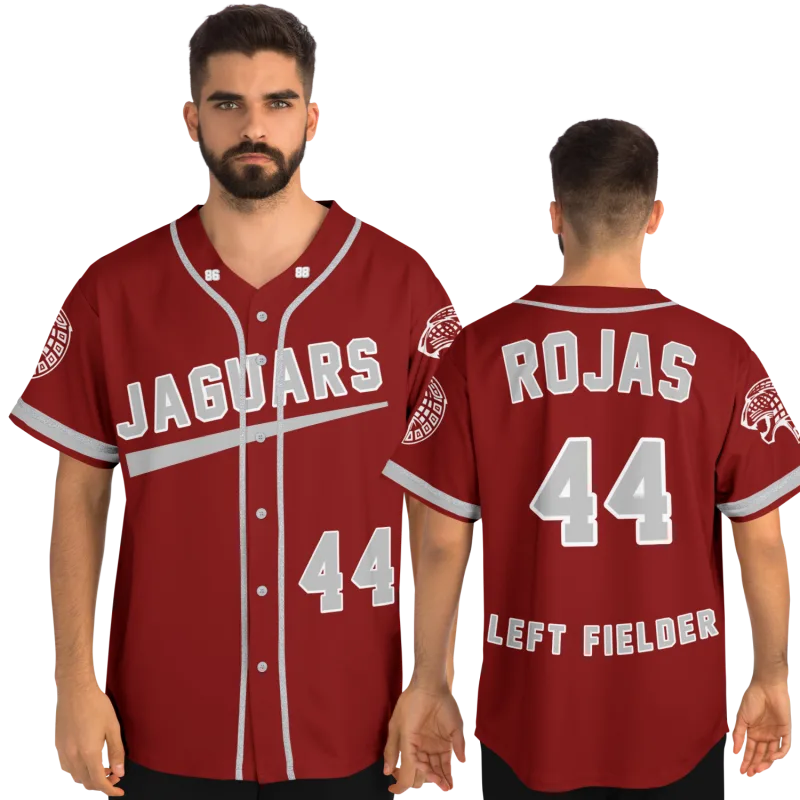
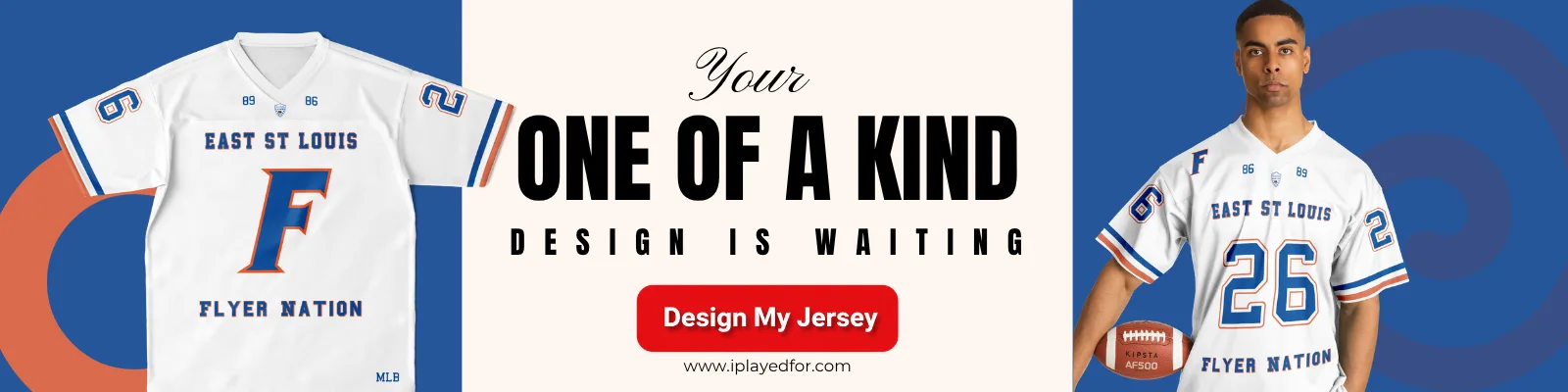
You can. A custom jersey built around your actual name, your actual number, and colors inspired by your old team isn't a costume or a copy of someone else's career. It's a tribute to yours, rebuilt. It's the version you can pull on and hang in a room where you'll see it, or wear to the next game, or give to a kid who needs to know what their parent looked like in the middle of it.
What Makes a Good Rebuild
If you go down this road, a few details matter more than people expect:
- Get the number font right. Block versus rounded, with or without the outline. Your memory of the 54 is specific, and the closer your design gets to it, the more it lands.
- Match the color, not just the name. That particular maroon, that specific gold. Pull up an old photo and compare.
- Decide home or away. Most former players have a strong emotional preference, and it's usually the one you wore in your biggest game.
- Name on the back, or not. Many programs didn't print names. If yours didn't, you can honor that, or finally add your own.
The Seniors Are Feeling This Right Now
One more thing, because it matters. Somewhere in Iowa, a senior just read that same list and felt something harder than rankings. The poll is out, the season's sealed, and they're discovering for the first time what you already know: the thing ends, and it ends before you're ready.
If you have a kid, a nephew, a younger cousin in that spot, it's worth saying something. Not advice. Just the plain fact: I remember exactly what this feels like. In our experience, that sentence does more than any pep talk. It tells them the feeling is normal, survivable, and shared by every person who ever wore the number.
And if you're the one reading this in a quiet room on a November weekend wondering why a list of schools got to you, that's the answer. You're not watching the season end. You're remembering your own, and it was worth remembering.
Your jersey is still out there waiting.
Design yours in minutes and see your name and number exactly the way you remember it.
Frequently Asked Questions
When are the final Iowa high school football rankings released?
The final Top 25 of the season is released after the last regular-season games wrap up, which for the 2026 season landed on November 22. Rankings are compiled by media panels and cover the major classes, and Sports Illustrated's high school coverage publishes the full list so you can see where every program landed.
Do high school football rankings affect the playoffs in Iowa?
Iowa's postseason qualification is determined by the state athletic association's own process, not by media polls. The Top 25 is a recognition of how teams performed and how voters saw the field, but it doesn't set the bracket. That's part of why the final list feels more like a verdict on the season than an input to what comes next.
Why do former players get so emotional about rankings lists?
Because a ranking list is a compressed version of the thing you used to live inside. A school name, a number, a position in a pecking order: all of it points back to a season, a group of teammates, and a version of you with a clear purpose. The list is data, but what it triggers is memory, and for many former players that memory has a physical anchor: a jersey, a field, a smell.
Can I get a custom jersey with my old high school number and colors?
Yes. A custom jersey can be built around your own name, your own number, and colors inspired by your old team, so it carries the look you remember. The more specific detail you can bring, such as the number font, the exact shade, and home or away, the closer the finished jersey will feel to the one you wore. You can start designing one at iPlayedFor.
What if my old school's jersey style no longer exists?
That's more common than you'd think, since programs change uniforms, merge, or close entirely. A custom design lets you rebuild a tribute to the version you wore, using old photos as reference. Many former players find this is the real value: a jersey that preserves the look of a team the current version no longer resembles.
Is it too late to get a jersey made if I played decades ago?
Not at all. Former players order jerseys from every era, from the 1970s through last season. The memory is the blueprint, and an old team photo, yearbook page, or even a teammate's recollection is usually enough to get the details right.
See also: the 10 most football-crazy states in America | Friday night lights were real | why you still dream about high school games | the difference between a sports fan and someone who actually played | the bus ride home after a loss