

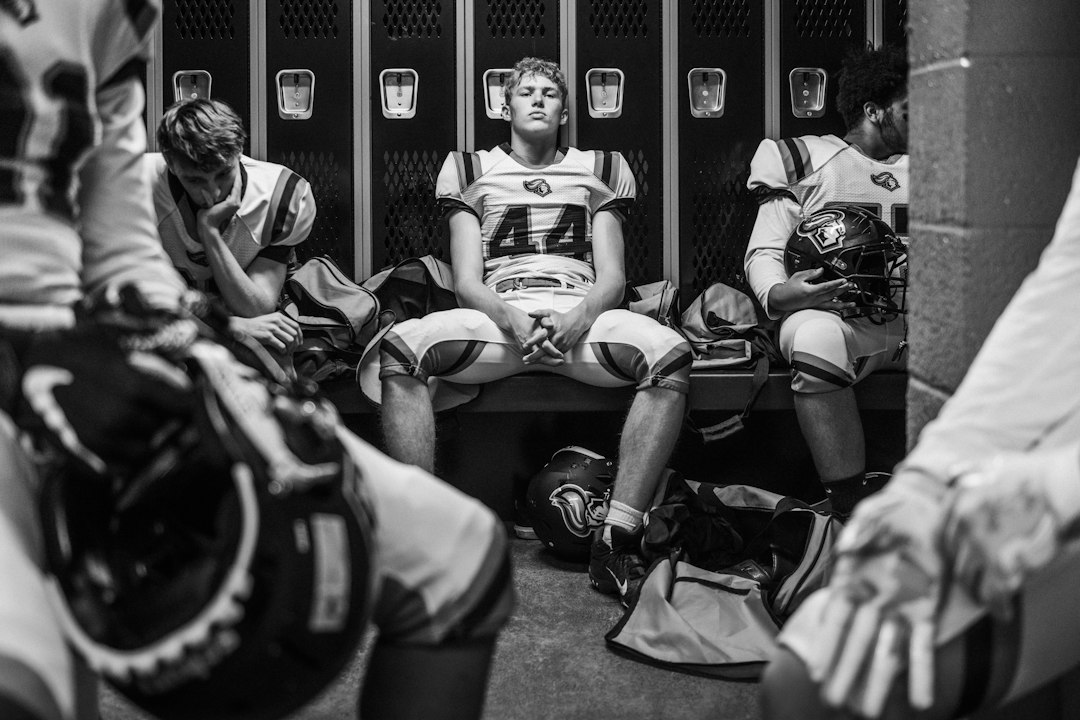




The conversation around EWU must capitalize going in and out of halftime against Northern Colorado is already happening in coaching circles — and for anyone who ever strapped on a helmet, the tactical framing of this Big Sky matchup cuts straight to the part of the game that never shows up on a box score.
This is where football is actually decided. Not in the highlight plays. Not in the third-quarter drives that make the broadcast cut. In the two minutes before the locker room and the four minutes after the teams come back out of the tunnel. That window is where Eastern Washington intends to make its statement on Saturday — and the circumstances surrounding Northern Colorado make this particular moment worth watching closely.
Here is the number that matters: Northern Colorado is 2-4 on the season, 1-2 in conference play, and this Saturday they will be playing in their third homecoming game of the fall.
Three homecomings. One season. That is not a scheduling footnote — that is a psychological condition that EWU's staff almost certainly circled on the whiteboard the moment they pulled the scouting report.
The Third Homecoming: What That Number Does to a Football Team
No broadcast analyst on Saturday will mention what homecoming actually costs a football program to host — because it has nothing to do with scheme or personnel.
It starts with the band, which is louder and closer than usual. It continues with the alumni who appear in spaces that are normally off-limits. The university president makes an appearance. The tailgate begins at 9 AM and the smell of it drifts to the warm-up field. There are halftime ceremonies that require players to stand in full pads while someone in a suit hands a plaque to someone else in a suit. The visiting team's alumni section is more vocal than it would be for a standard road game.


For a team hosting its first homecoming of the season, all of that is manageable — even energizing. The crowd is yours. The electricity is real.
For a team hosting its second, the routine starts to show.
For a third? In a single October? The Northern Colorado players are not running out of that tunnel on a wave of genuine collective electricity. They are executing the homecoming performance. They are managing an occasion rather than attacking a football game.
Every former player understands the difference between those two states — not as an abstract concept but as a physical memory. There were games where you were playing on pure want, where the locker room before kickoff felt like something pressurized. And there were games — not bad games, not games where you were unprepared — where you were playing with discipline rather than hunger. Professionalism rather than fire.
When those two states collide on a football field, the outcome is rarely a surprise to anyone who has lived it.
Eastern Washington arrives Saturday with no homecoming to host, no ceremony to manage, and no alumni corridor to navigate. They are simply playing football. That asymmetry is not small.
What the Halftime Window Actually Means — For Anyone Who Has Been in That Locker Room
The phrase "capitalize going in and out of halftime" is coaching language for something former players experience as pure feeling.
Going into halftime means the final 90 seconds of the second quarter — the two-minute drill, the clock management decisions, the sideline awareness that tells a quarterback whether to spike it or push the route. It is the moment when preparation either holds or cracks under the weight of a live game with real consequences.
Coming out of halftime means the first four minutes of the third quarter — the opening possessions after both teams have had their adjustments, their water, and their coaches' voices in a quiet room. This is when the team that won the emotional battle at halftime asserts it physically on the field.
In our experience studying the margins of conference play in October, the team that controls both sides of that window wins the game more often than not — regardless of what the scoreboard showed at kickoff. It is not about talent differential in those moments. It is about focus density. About which team is operating with the most bandwidth available for the specific technical work that late-first-half situations require.
A Northern Colorado program playing its third ceremonial weekend of the fall has a bandwidth problem. Not a character problem. Not a preparation problem necessarily. A bandwidth problem — the kind that accumulates invisibly and surfaces in exactly the kind of situational football that the halftime window demands.
EWU's coaching staff knows what to look for. The question Saturday is whether they can execute the plan to exploit it.
Marcus W. and the Road Trip That Felt Like a Gift
Marcus W., 34, played linebacker at a Division II program in the Pacific Northwest for three seasons before a knee injury ended his playing career in his junior year. He still streams every Big Sky game he can find.
"Homecoming games at our school were the ones I dreaded most as a player," he said. "Not because the competition was harder. Because everything around the game was harder — you had to be twice as mentally disciplined to stay locked in on your actual job. But when we were the visitors at somebody else's homecoming? I always felt like we had the edge. They were managing the event. We were just playing football."
Managing the event versus playing football. That distinction is the entire story of this matchup.
The Mechanics EWU Will Be Targeting in Specific
The psychological framework matters — but there are concrete football reasons why the halftime margin is where Eastern Washington needs to make its move.
The two-minute offense as a diagnostic. How a team executes in the final 90 seconds of the first half is one of the most reliable indicators of weekly preparation quality available to an opposing staff. Clock management, down-and-distance awareness, quarterback decision-making on boundary routes — these are not athletic plays. They are repetition plays. They work from practice reps and cognitive calm, and they are among the first things to degrade when a program's collective bandwidth is divided.
Third-quarter identity. The first two possessions of the second half are where teams that held their composure at halftime impose that composure on the game. For EWU, coming out of the locker room with a lead — or with the momentum of a scoring drive in the final minutes of the half — means those opening third-quarter possessions can be played from confidence rather than urgency. The difference between those two modes is visible on every snap.
Cumulative fatigue in October. Northern Colorado at 2-4 has been in contested football games. That is evidence of competitive toughness, not weakness. But it also means the miles are in the legs, the mental reps of difficult weeks are stacked, and a third homecoming weekend arrives not as a lift but as another demand. EWU, operating with the structural clarity of a team focused entirely on one road conference game, carries a specific freshness that is difficult to quantify and impossible to ignore.
Every Former Player Knows This Road Trip
Remember pulling into a parking lot at somebody else's homecoming?
The tailgate was already at full volume. Someone's alumni band was playing something that echoed off the fieldhouse wall. The home team's warm-ups had a performance quality to them — they were running routes for an audience, not just getting loose. You could feel the event happening around the football game rather than the football game happening inside the event.
Your visiting locker room was too small and too cold, the way visiting locker rooms always are. No ceremony. No administrator appearances. No one asking for a photo before kickoff. Just your guys, your coaches, and the specific quiet of a team that had driven three hours to take something from somebody.
That quiet was not nothing. That quiet was fuel.
You ran out of the tunnel and got booed by people who were already celebrating before a single play had been run — and something about that boo lit a fuse that no homecoming crowd can manufacture for its own team. They were protecting what they had. You were there to take it.
The score doesn't always reflect which team was more dangerous that afternoon. But every former player who has been in that visiting locker room at somebody else's homecoming knows which team was carrying the edge. You felt it in the way your teammates moved during warm-ups. You felt it in the way the first series landed.
Eastern Washington has that visiting locker room edge on Saturday. They know it. Their staff built the week around it.
What This Game Means for the People Who Remember Playing It
Mid-October Big Sky matchups between a motivated visitor and a home team managing ceremony do not generate national attention. They generate something more specific: the recognition of former players who watch a setup like this and feel it land somewhere in their chest before the opening kick.
You are not watching this as a neutral. If you played this game — at any level, in any decade, in any uniform — you are watching Eastern Washington and Northern Colorado with a set of instruments that casual viewers do not carry. You know what the visiting team's body language looks like when they have the edge. You know what a locker room feels like at halftime when the score matches the momentum. You know what the first play of the third quarter tells you about who actually won the break.
That knowledge does not have an expiration date. The number you wore, the colors you suited up in, the name on the back of the jersey that made you feel like you were part of something larger than a single game — that is still part of who you are. Watching games like this one, reading the invisible dimensions of a matchup that the box score will never fully explain, is the clearest evidence that your playing days are still active inside you.
The jersey was never just fabric. It was the physical form of the identity you built on every two-minute drill, every halftime adjustment, every third-quarter possession that told the truth about who had really won the break.
Your jersey is still out there waiting.
Design yours in minutes and see your name and number exactly the way you remember it.
Frequently Asked Questions
Why does hosting three homecoming games in one season affect a team's performance?
Each homecoming weekend introduces significant logistical and psychological overhead that extends well beyond game preparation — alumni events, administrative obligations, halftime ceremonies, and elevated external attention all compete for the mental bandwidth a football program needs to execute at its highest level. One homecoming is energizing. A second becomes routine. By the third occurrence in a single fall, the event-management burden is real and cumulative, and it tends to surface in exactly the technical, situational football that the halftime window demands. Visiting teams, free of all ceremony, consistently bring a narrower, cleaner focus to those environments.
What specifically makes the halftime window the decisive leverage point in a game like this?
The final 90 seconds of the first half and the first four minutes of the third quarter function as the game's emotional hinge. A team that scores going into halftime enters the locker room from a position of confidence, which means coaching adjustments are received and processed more effectively. A team that opens the third quarter with a decisive possession converts that confidence into visible momentum on the scoreboard. In competitive October conference games decided by single scores, the team that controls both sides of the halftime window wins at a significantly higher rate than the team that splits or concedes both.
How does a visiting team's mindset at a homecoming game create a tactical edge?
Visiting teams at homecoming games carry a motivational simplicity that is structurally unavailable to the home team. There is no ceremony to manage, no alumni section to perform for, and no institutional event running parallel to the football game. Every preparation rep during the week, and every mental resource on game day, is directed at executing the game plan. Former players consistently describe road trips to opponents' homecoming games as some of the most focused environments of their careers — not because they were better prepared in theory, but because the distractions present for the home team were simply absent for the visitors. Eastern Washington arrives Saturday with that structural clarity intact.
What should former players specifically watch for during this game?
Watch the final two possessions of the first half — the clock management decisions, the quarterback's awareness on boundary routes, and the sideline body language after each of those possessions resolves. Then watch the first two series of the third quarter. The team that executes with precision in those four windows is the team that won halftime, regardless of what the scoreboard shows at the break. Former players who understand this will see a fundamentally different game than a casual viewer tracking the score. The halftime window is where the actual result is decided in games like this one.
See also: what playing under the lights actually felt like | the most football-crazy states in America | what high school sports teach you about momentum and execution | the bus ride home after a loss