


The Big 12 Football Power Rankings after Oklahoma State's historic win over Oregon tell one story on the surface — and something much deeper underneath, if you know where to look.
The box score captured the points. The highlight packages captured the plays. What neither could capture is the weight of what that Saturday meant for every former player who watched from a couch, a bar stool, or a half-dismantled tailgate and felt something old and specific flicker back to life in their chest.
College football scores belong to everyone. The feeling behind them belongs only to the people who understand what it costs to produce one.
What follows is our read on the updated Big 12 standings after Week 2 — filtered through the only lens that gives these moments their full meaning: what does a result like this actually mean to someone who has been in that locker room?
Oklahoma State Just Showed What Preparation Looks Like When It Peaks
Here is the plain version of what happened: Oklahoma State beat Oregon. Not a program in transition. Not a team depleted by circumstance. The Cowboys faced a Power Four program with established recruiting infrastructure, genuine national brand recognition, and every structural reason to expect a routine result — and Oklahoma State went out and took the game anyway.
Yahoo Sports' full Big 12 power rankings breakdown covers the standings and Week 2 context in detail, but the rankings themselves are almost secondary to the larger story. What the win represents is what earns the conversation.
For anyone who ever strapped on pads, ran a two-minute drill in full gear under August heat, or spent a Tuesday at 6 a.m. in a film room working through a defensive scheme before the rest of campus was awake — you already know what a win like this costs before it ever appears on a scoreboard. You know the invisible reps. The ones accumulated in November when the season has ended and you are out there anyway, not because anyone is watching, but because you genuinely cannot make yourself stop.

Oklahoma State's result against Oregon is a monument to all of that unseen work. Every person who has played this game at any level recognizes it immediately and without any need for explanation.
The Updated Big 12 Power Rankings, Former Player Edition
1. Colorado — A Story That Keeps Finding New Pages
Colorado is ascending, and even casual observers at a distance can feel the shift in the program's gravity. What Deion Sanders has constructed in Boulder runs deeper than any single scheme or recruiting class. He brought belief into that building — and in college football, belief moves through a locker room faster than any playbook ever devised.
Every former player carries a specific memory of being inside a program that was genuinely on the rise. That particular energy — when newcomers stop waiting to see what the program is and start actively shaping what it becomes, when upperclassmen trade territorial instincts for genuine collective investment — is among the rarest things in team sports. You cannot manufacture it on a whiteboard or schedule it into a preseason camp. It either takes hold or it doesn't.
Right now, Boulder has it in full.
What earns the Buffs the top position in these rankings is not simply the record. It is the character of the performances — confident execution, physical intent, and a purposefulness that signals a team operating from genuine internal conviction rather than external pressure. Those are the markers of a program that has absorbed its identity rather than borrowed it for the season.
2. Oklahoma State — One Win That Reframes the Entire Conversation
The Cowboys' defeat of Oregon does not merely advance them a few positions in the standings. It changes the fundamental conversation about what this program's ceiling looks like at this specific moment.
There is a category of upset that every former player files into permanent memory — the game where the underdog was not playing for the odds or even the scoreboard, but for something more interior and specific than any broadcast can name. Oklahoma State's performance against Oregon belongs in that category without qualification. This did not look like a team that stumbled into a favorable result. It looked like a team that had prepared with deliberate precision for exactly this opponent and executed when the window opened.
That distinction matters enormously to anyone who has been in a preparation room. Running hot is circumstance. Being ready is the product of months of accumulated work that tends to look like luck from the outside and feels like inevitability from the inside.
The Cowboys rise in these rankings because of what the win reveals about what this program believes about itself. In college football, a team's genuine self-belief is among the most predictive variables available for understanding what that team does next.
3. Oregon — Sharpened, Motivated, and Far From Finished
A loss of this nature does not define what Oregon is. What it does is focus the program's attention with a precision that comfortable wins rarely produce.
Every former player has sat through the film session after a result the program was not supposed to absorb. The meeting where there is nowhere to look except directly at what went wrong — down by down, series by series — until every person in the room has fully confronted their individual contribution to the outcome. That process either fractures a team or refines it into something harder, and Oregon has the roster depth, the coaching experience, and the institutional composure to use this the way elite programs use adversity: as raw material for something better.
Dismissing Oregon based on a single Week 2 result would be a fundamental misread of the program's actual character. The more instructive question is not what happened Saturday but what the Ducks do with the following fourteen days. A program's response to a bad result tells you more about its real identity than the result itself ever could.
4. Oklahoma — Assembling an Identity in Real Time
There is something genuinely compelling about watching Oklahoma work through its current moment. The program is recalibrating — navigating a transition that goes beyond personnel changes and into the deeper question of what this version of the Sooners actually is, week to week, when the game plan meets a prepared opponent.
Former players understand this stage from the inside because most of us lived through at least one version of it. It is the season where the depth chart is still being negotiated, where the culture is being built rather than inherited, and where the real question is not whether the team has sufficient talent but whether it has the cohesion to convert that talent into something reliable on third and long in a road game in October.
Oklahoma has the history, the facilities, the recruiting relationships, and the full infrastructure of a major program. What is still being assembled is the specific chemistry that makes all of those assets function as a single organism when the pressure is genuine and the margin is thin.
The trajectory for programs at this stage tends to split by mid-October: they either locate their identity before the schedule becomes fully hostile and carry that momentum into November, or they remain inconsistent long enough that the off-season conversation starts before the season ends. The early indicators for Oklahoma lean toward the former. But it is genuinely close either way.
What the Standings Cannot Tell You
Marcos D., 34, played linebacker at a mid-major program in Texas and coaches youth football on weekend mornings. When Oklahoma State's result appeared on his timeline Saturday night, he sent his old linebacker coach one word: "Believers." His coach replied with the same word. That was the complete exchange — nothing before it, nothing after. If you played this game, you already understand everything those two messages contained without needing a single additional word of context.
This is where power rankings reach their structural limit. They are genuinely useful instruments for understanding the surface architecture of a conference season — who has beaten whom, who is trending in a particular direction, what the tiebreaker scenarios look like when November arrives. What they cannot do is show you which locker room has a leader staying ninety minutes after the building empties to review film that nobody assigned. Which team is running conditioning work with genuine intent and which is moving through the motions efficiently enough that a camera would not catch the difference. Which program is a few plays from breaking open and which one is a single bad half away from fracturing under its own expectations.
Former players can sometimes sense these things through a broadcast in a way that pure statistical analysis cannot approach — not because intuition is inherently more reliable than data, but because we carry experiential reference points for what certain kinds of performances signal when you have been inside a similar situation.
When you watch Oklahoma State play Oregon and you have sat in a film room preparing specifically for a game your program had no conventional business winning, you recognize the posture without needing anyone to explain it. The controlled aggression. The way a team that has prepared for this specific opponent carries itself differently from a team executing a standard weekly game plan against a generic opponent on the schedule.
Oklahoma State had that posture from the opening series against Oregon. Which is why the result, in retrospect, feels less like a shock and more like an outcome the available data simply did not have the vocabulary to predict.
The Rest of the Conference — What Actually Deserves Your Attention
The Programs in the Process of Becoming
The middle tier of the Big 12 is where Week 2 results become most instructive for anyone genuinely trying to understand what this conference will look like when October turns to November. Several programs are in that authentically ambiguous early-season space where ceiling and floor are still being established — where a single performance can either validate an entire off-season of work or send a staff back to the foundational questions before the schedule gets fully hostile.
This is also where former players tend to concentrate their attention, because this is where the season-defining internal moments actually happen. Not at the top, where established programs are expected to perform, and not at the bottom, where results are largely predictable regardless of weekly variance. The middle is where the gap between what a program should be and what it actually is gets resolved through accumulated Saturdays — and where the resolutions tend to surprise people who were only reading the recruiting rankings.
Two things worth tracking in this tier:
- Which programs are sustaining roster depth without sacrificing execution quality as the two-deep gets genuinely tested by injuries and game-week attrition
- Which offensive lines are functioning as cohesive units rather than as five individuals who happen to occupy adjacent gaps in the formation
The second indicator has historically been more predictive of conference performance than individual skill position evaluation at any spot on the field. An offensive line that operates as a single organism changes what the quarterback can attempt, what the running back can find in the second level, and how long the designed play structure remains viable when a defense has had a full week to prepare for your tendencies specifically.
The Bottom of the Rankings — An Honest Assessment
Programs at the lower end of Big 12 power rankings after Week 2 have a narrow and specific task ahead: make the targeted corrections before the full weight of the conference schedule arrives and removes the margin for still-being-figured-out. This is not the moment for philosophical reconstruction. It is the moment for the precise adjustments that coaching staffs identify during the week — the corrections that happen in meetings and on practice fields that no camera captures and no ranking accounts for, and that can quietly reshape a season's trajectory if they take hold at the right moment.
Every former player who has been part of a team that started a season poorly and finished it with genuine momentum remembers that the turn happened in practices with no audience. Corrections that accumulated gradually and then cohered suddenly into something that looked, from the outside, like a team that had simply decided to be different. The bottom of these rankings is not a verdict on what a program is. It is a prompt for the question that actually matters: what are you going to do with the information you now have?
The Big 12 Is More Genuinely Competitive Than It Has Been in a Generation
The conference's expansion reshaped the competitive landscape in ways that are still being worked out in real time, week by week. Adding programs from different football cultures, different recruiting footprints, and different historical traditions created a league that is harder to read from the outside than at any previous point in its existence — and more authentically competitive from top to bottom than the previous two decades of its operation.
For former players, this is the best version of the sport. The version where outcomes are not structurally determined in advance by recruiting rankings and program prestige. Where the team that was supposed to win can lose on any given Saturday because the team that was not supposed to win spent the preceding ten days preparing with specific and deliberate intent for exactly this opponent.
Oklahoma State just delivered the clearest possible demonstration of that dynamic. Oregon, by every conventional measurement available before kickoff, was the superior program. Oklahoma State, by the only measurement that is actually taken when the whistle blows, was better prepared for this specific game on this specific Saturday.
That is the version of college football that produces something in former players that is genuinely difficult to articulate to people who did not play — and that requires no articulation at all for people who did.
The Big 12 is full of that version of the sport right now. Colorado is ascending with genuine conviction behind it. Oklahoma State has staked a serious claim to something larger than a single result. Oregon is recalibrated and hungry in a way that comfortable programs rarely are. Oklahoma is assembling an identity in public view. And every Saturday from here through late November is going to produce at least one result that rewrites the conventional understanding of what this conference actually is.
Our team recommends watching the conference not through the lens of who is supposed to be good — that information is already fully priced into the expectations — but through the lens of who is becoming something that was not fully visible six weeks ago. That is where the real story of this Big 12 season is being written, one Saturday at a time.
Every Former Player Has a Version of This Game in Their Permanent Memory
It was not necessarily a ranked opponent. Maybe it was a rival your program had not beaten in four years. Maybe it was a road game where the spread was a full two touchdowns and nobody outside your locker room gave you any reasonable chance — and you walked into that stadium and played the best forty minutes of football your team had produced all season and came out the other side of it knowing, with complete certainty, that something had permanently changed.
The scale is different from what Oklahoma State accomplished Saturday. The interior experience is not.
That specific moment — when the final whistle sounds and you look across at the people who went through every single preparation session with you and you all understand simultaneously that something just happened that the people watching cannot fully account for yet — that moment does not diminish with time the way most memories do. It gets clearer. More precise. More vivid in specific detail. The names, the faces, the exact weight of the air in that stadium at that specific second.
Oklahoma State's players will carry what they built against Oregon for the remainder of their lives. Not because it reshapes their professional trajectory or earns a line on a résumé. But because they will always hold the specific knowledge of what it cost to make that result possible — and the knowledge that when the moment arrived, they were standing in exactly the right place to meet it.
That is what wins like this are really made of. The scoreboard captures the outcome. The people who played capture everything else.
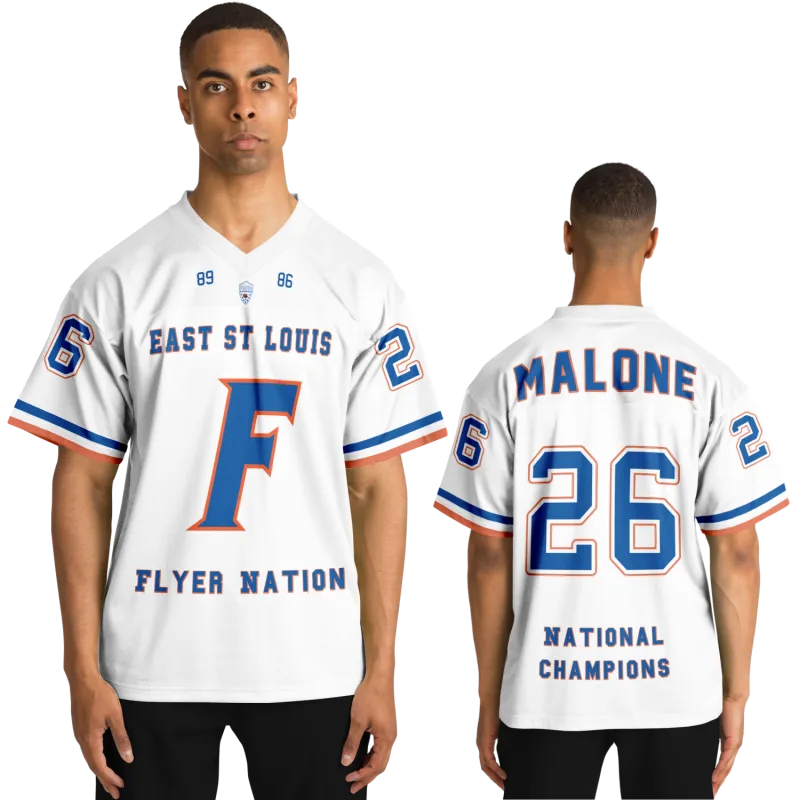
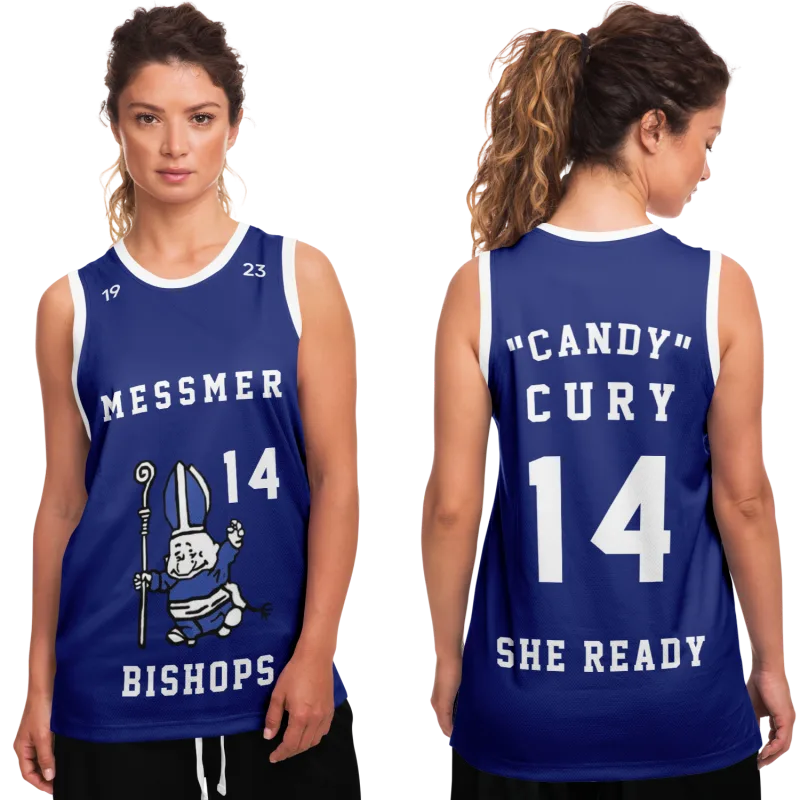
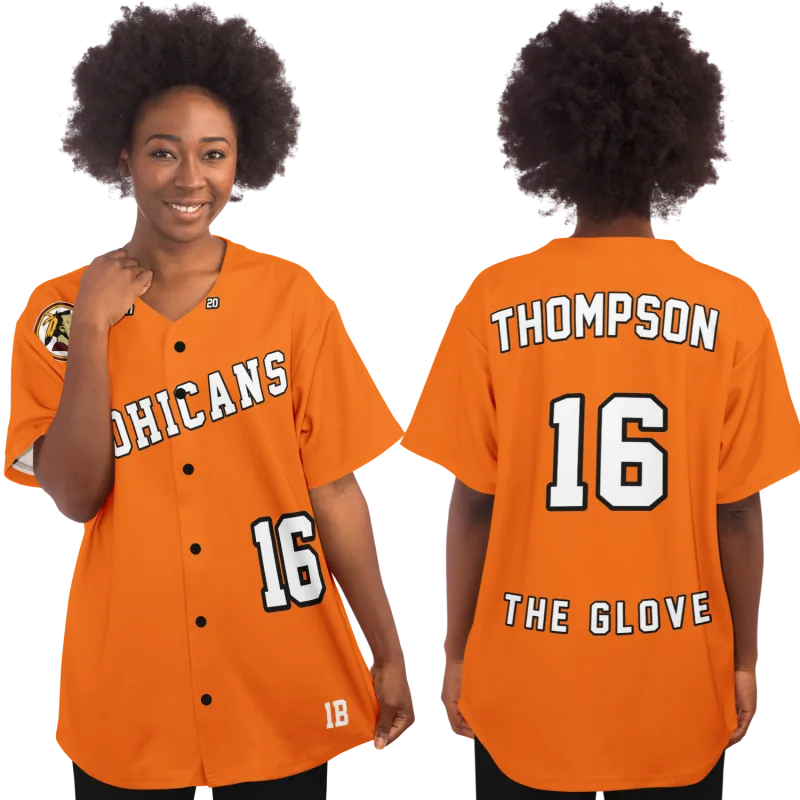
Your Jersey Is Still Out There Waiting
That feeling just surfaced again while you were reading — and it belongs back on your back.
Design yours in minutes and see your name and number in the style of the game you played, exactly the way you remember it.
Frequently Asked Questions
What makes Oklahoma State's win over Oregon historically significant for the Big 12?
Oklahoma State's victory carries historical weight because it came against a program that arrived in the Big 12 with an established Power Four identity, proven recruiting infrastructure, and the kind of national profile that typically insulates programs from early-season upset results. Wins of this character — where a conference member defeats a high-profile opponent through deliberate preparation and composed execution rather than circumstance — tend to reshape the entire conference's competitive perception for the remainder of the season. They signal that the Big 12's middle tier is capable of competing at an elite level on any given Saturday, which raises the genuine stakes of every subsequent matchup throughout the conference schedule.
Why does Colorado rank at the top of these Big 12 power rankings so early in the season?
Colorado's position reflects the full picture of their early-season performance rather than simply their win-loss record. Programs earn credible top rankings when they are winning in ways that suggest sustainable competitive quality — physical execution, decisive performance in close situations, and the team cohesion that holds up as opponents gain a full preparation week to target your tendencies specifically. Colorado has demonstrated all three qualities through two weeks of play. Their ranking represents a read on trajectory and demonstrated character, not a projection built on reputation or historical prestige alone.
How does the Big 12's expansion change how early-season power rankings should be interpreted?
The addition of programs from meaningfully different football cultures and recruiting geographies has made the Big 12 genuinely harder to evaluate in the early weeks of a season than its previous configuration allowed. Programs that built their competitive standing against the old conference's competition base are now being tested against a wider range of systems, preparation approaches, and football traditions. The honest assessment is that it takes more of the season to establish reliable hierarchies in the expanded conference — which means Week 2 power rankings are a useful snapshot of current available information but should be held with appropriate flexibility as predictors of where the standings will actually land in November.
What should Big 12 fans watch in Week 3 to understand whether these rankings will hold?
The single most predictive indicator following a major upset result is the response from both programs directly involved. For Oklahoma State, the question is whether the Oregon win represents a performance ceiling or a new operational baseline — programs that sustain upset results tend to play with measurably elevated confidence and preparation discipline in the weeks immediately following. For Oregon, the question is the speed and completeness with which they return to executing their own system rather than reacting to what went wrong. For Colorado, the question is whether the program's cohesion holds as opponents begin designing preparation specifically around their tendencies. Week 3 answers all three questions simultaneously, which makes it among the most informative single weeks of the early conference season.
See also: what playing under the lights actually felt like | most football-crazy states in America | the difference between a sports fan and someone who actually played | what high school sports taught you that nothing else could